 Arms of Robert Hemmings
Arms of Robert Hemmings
Blazon
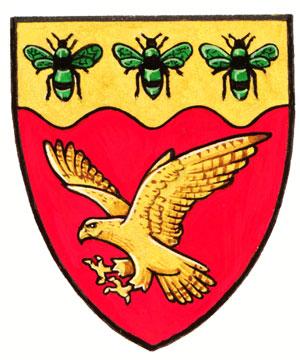
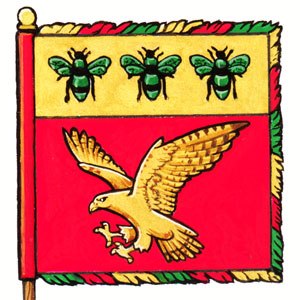
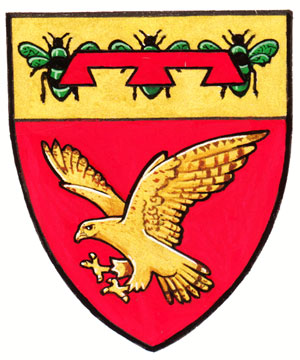
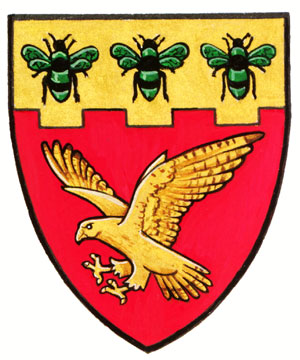
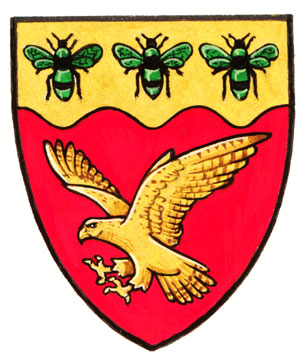
Gules a common kestrel stooping, on a chief Or three bees Vert;
Symbolism
The common kestrel, also called a windhover for its ability to hover before descending suddenly, is used here as a metaphor for Christ or of divine epiphany, based on the poem “The Windhover” written by Gerard Manley Hopkins in 1877. The red colour of the field symbolizes the blood of sacrifice, and the gold for the quality of that sacrifice. The bees emphasize the central importance of work.
Crest of Robert Hemmings
Blazon
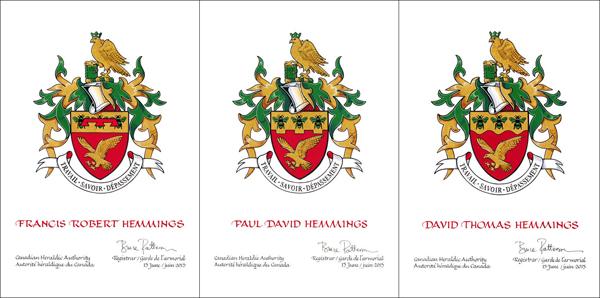
A common kestrel wings addorsed and inverted Or wearing a coronet treflé Vert and resting its dexter talon on a closed book palewise Vert edged Or;
Symbolism
The book symbolizes the central role of learning for Dr. Hemmings. The symbolism of the common kestrel is taken from the Arms. The coronet alludes to the Irish ancestry of Dr. Hemmings’ wife Gisèle Thérèse O’Donnell.
Motto of Robert Hemmings
Blazon
TRAVAIL • SAVOIR • DÉPASSEMENT;
Symbolism
Meaning “Work, knowledge, going beyond”, the use of a French motto alludes to the French ancestors of Dr. Hemmings from Mortagne-au-Perche, Normandy.